Laundry Chemical Distributor Playbook: Selling Performance to Hotels and Institutions
Hotels, healthcare laundries, foodservice operations, and institutional facilities do not buy chemistry for novelty. They buy lower rewash, cleaner whites, reliable stain removal, linen life, and predictable cost per kilogram processed.
For distributors, that changes the sales conversation. A detergent or additive built with the right enzyme system can help move the pitch away from price-per-drum and toward measurable wash outcomes.
Enzymimpact supports laundry chemical manufacturers and distributors seeking an enzyme supplier for industrial laundry chemicals with practical enzyme selection, formulation compatibility guidance, and scale-up support for commercial wash programs.
What institutional laundry buyers actually value
Most institutional buyers are under pressure from three directions:
- Throughput: more linen processed per shift with fewer callbacks
- Cost control: reduced rewash, water, energy, and chemical waste
- Asset protection: longer textile service life and lower replacement spend
- Operator simplicity: products that work across mixed soils and variable load conditions
- Compliance confidence: consistent cleaning performance in documented programs
An enzyme-enabled laundry product should be positioned against these operational outcomes, not as an ingredient story alone.
Where enzymes fit in the distributor sales narrative
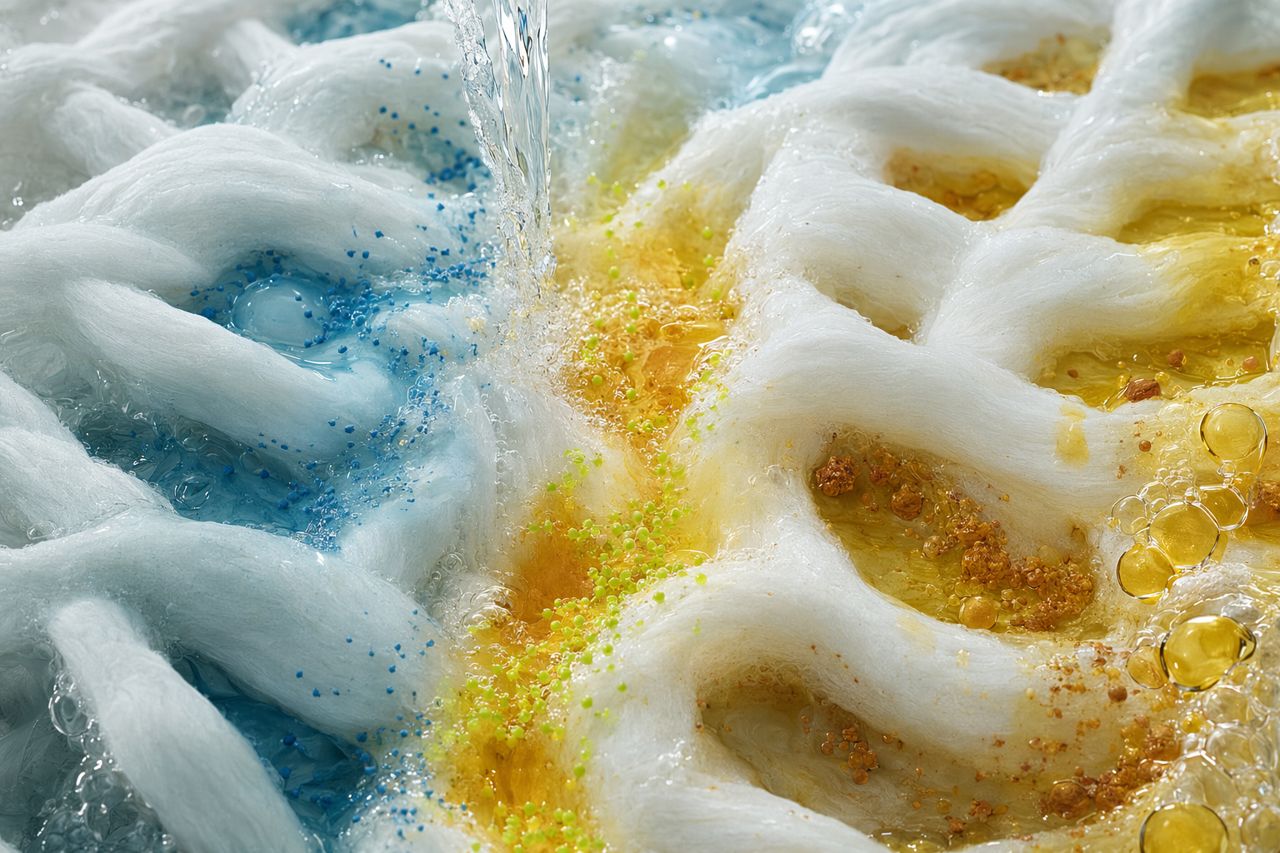
Enzymes help detergents and additives target specific soil classes under controlled wash conditions. For industrial laundry distributors, the strongest message is often simple: the right enzyme blend can help release soils that surfactants and builders struggle to remove alone.
Key enzyme classes for industrial laundry chemistry
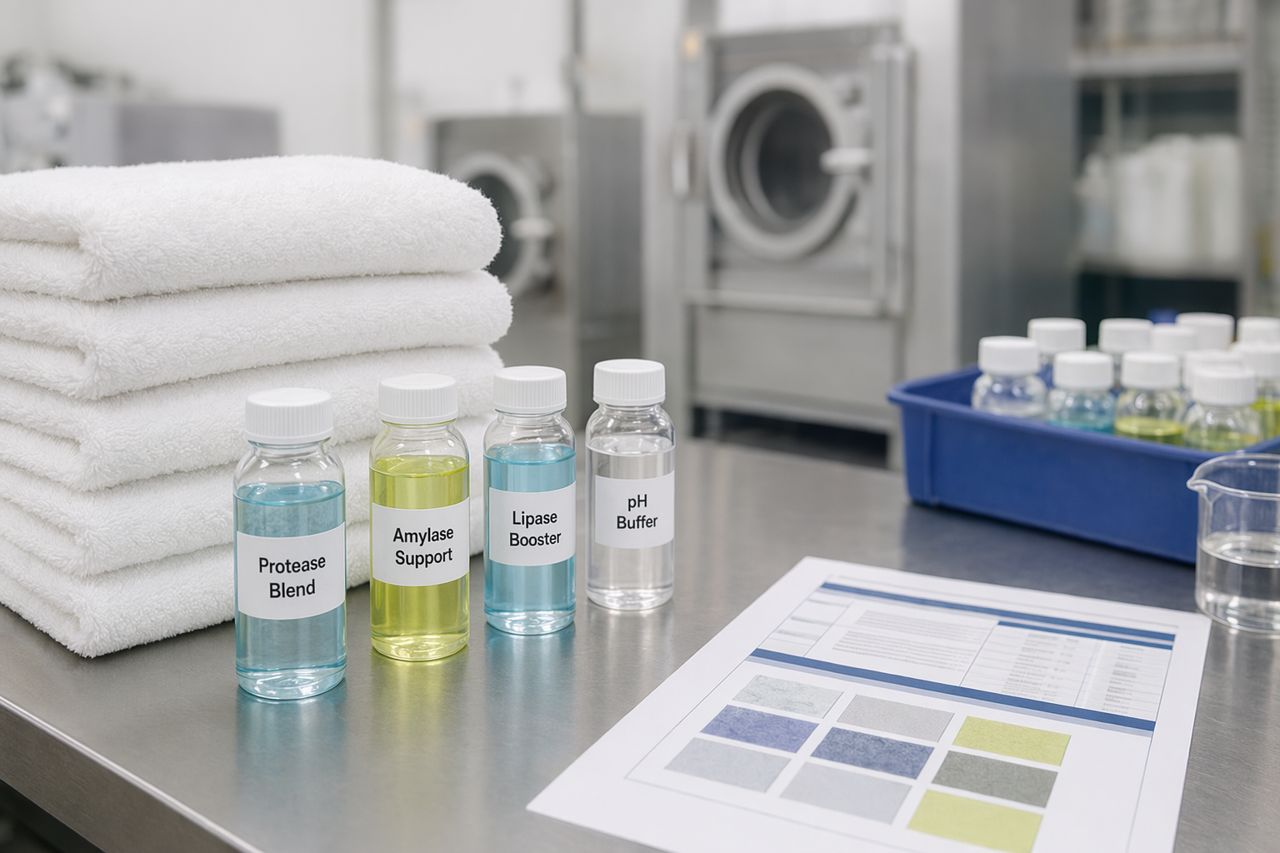
- Proteases: support removal of protein-rich soils such as food residues, blood, perspiration, and body soils
- Amylases: target starch-based soils from sauces, processed foods, and institutional kitchens
- Lipases: assist with oily and fatty soils found in hospitality, foodservice, spa, and workwear loads
- Cellulases: can support fabric appearance, brightness maintenance, and fiber surface care on cotton-rich textiles
- Mannanases and pectinases: useful where gums, thickeners, fruit residues, or personal care soils are part of the stain profile
The distributor advantage comes from matching these classes to the account’s linen mix, soil map, wash temperature, dosing system, and product format.
Build the pitch around account-specific soil maps
A hotel laundry and a healthcare laundry may both wash white cotton-poly blends, but their soil profiles are different. A useful distributor playbook starts by segmenting accounts by stain load.
Hospitality laundries
Common challenges include body soils, cosmetic residues, food stains, spa oils, beverage marks, and long linen life expectations. Enzyme-enabled detergents can be positioned around reduced rewash, improved brightness retention, and more consistent stain release at practical wash temperatures.
Healthcare and care facilities
Healthcare and aged-care operations often manage protein-heavy soils, mixed textiles, and strict process control. The distributor conversation should focus on repeatability, compatibility with established wash programs, and product stability in automated dosing environments.
Foodservice and industrial workwear
Grease, starch, sauces, and particulate soils can create heavy rewash rates. A multi-enzyme approach may help broaden stain coverage when paired with appropriate surfactants, alkalinity, and sequestration.
Education and municipal institutions
Budgets are often constrained, and wash conditions can vary. A well-formulated enzyme detergent or pre-spotting additive can support performance without requiring a complete process redesign.
Selling performance without overpromising
Distributors gain trust when claims are framed as formulation outcomes under defined conditions.
Use language such as:
- “Supports improved removal of protein and starch soils in validated wash programs.”
- “Designed to help reduce rewash where stain profiles match the enzyme system.”
- “Compatible with selected liquid or powder formats after formulation review.”
- “Built for performance at practical institutional wash temperatures.”
- “Supports differentiated detergent and additive positioning for hospitality and institutional laundries.”
Avoid broad statements that imply one additive solves every laundry issue. Institutional buyers respond better to defined fit, visible testing, and repeatable operating windows.
Formulation questions distributors should ask before quoting
Before proposing an enzyme-containing detergent, booster, or additive, collect the conditions that determine fit.
Account conditions
- What textiles dominate the load mix?
- What are the main stain complaints?
- Is rewash tracked by stain type or department?
- What wash temperatures are used for each program?
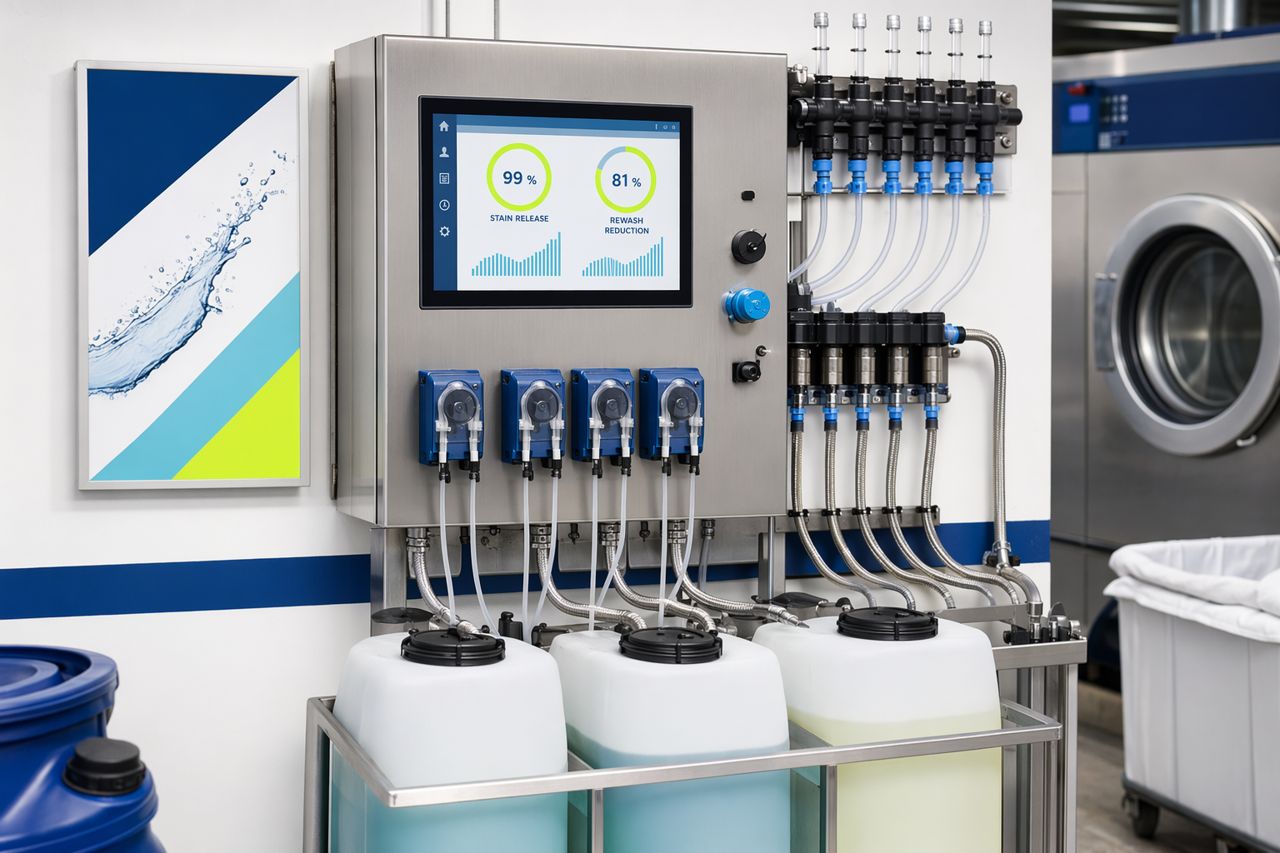
- What dosing equipment is installed?
- Are products stored in hot rooms, outdoor cages, or temperature-controlled areas?
Product conditions
- Is the target product liquid, powder, tablet, pod, or concentrated additive?
- What pH range is expected in storage and in wash?
- Which surfactants, builders, solvents, bleaches, and preservatives are used?
- Will the enzyme be used in the main detergent, a presoak, a booster, or a spot treatment?
- What shelf-life and shipping conditions are required?
These details allow the manufacturer and enzyme supplier to narrow the enzyme class, stabilization approach, and prototype pathway.
Matching enzyme systems to laundry product formats
Liquid detergents
Liquid formats are attractive for automated dosing, but enzyme stability must be engineered carefully. Formulation review should consider water activity, pH, preservative system, solvents, surfactant selection, and storage temperature. Distributors should position liquid enzyme detergents as convenient, controlled-dosing products when stability has been verified.
Powder detergents
Powder systems can provide strong separation from water-driven instability and may support broader builder packages. The sales message can emphasize robust transport, flexible dosing, and compatibility with industrial detergent manufacturing workflows.
Boosters and stain additives
Enzyme boosters are useful when distributors want to add performance without replacing the full detergent system. They can be introduced account by account, especially where rewash data shows recurring protein, starch, oil, or fiber appearance issues.
Presoak and pre-spotting products
These formats support targeted treatment before the main wash. They are especially useful for hospitality and foodservice accounts with repeated high-value linen staining.
How to create differentiated distributor programs
A distributor can turn enzyme chemistry into a stronger commercial program by packaging the offer around proof and service.
1. Start with a stain audit
Document the customer’s main rewash drivers. Separate body soil, food soil, oil, starch, cosmetic residue, and fiber dullness. This creates a basis for formulation selection and makes the quote more defensible.
2. Offer a controlled trial
Run a structured trial against the current program. Keep wash conditions, load type, and dosing approach clear so the buyer can compare outcomes fairly.
3. Sell rewash reduction, not ingredient complexity
Most buyers do not need a detailed enzyme lecture. They need confidence that the product supports operational goals. Translate enzyme selection into practical value: fewer rejected linens, better stain release, and more stable program performance.
4. Keep the dosing story simple
Industrial laundries prefer products that fit existing workflows. When possible, align the product with current dosing equipment and staff routines.
5. Build account-specific product tiers
Distributors can offer a standard detergent, an enzyme-enhanced detergent, and a targeted booster. This structure helps customers choose based on soil severity, linen value, and service expectations.
What product managers should align before launch
For laundry chemical manufacturers building distributor-ready products, alignment matters before the first field trial.
Technical alignment
- Enzyme class selection by soil target
- Format compatibility and stabilization strategy
- Wash pH and temperature fit
- Compatibility with surfactants, builders, bleach systems, solvents, and preservatives
- Packaging and storage expectations
- Shelf-life target and field handling conditions
Commercial alignment
- Target customer segment
- Primary performance claim
- Trial protocol and acceptance criteria
- Distributor training materials
- Objection handling guide
- Quote structure and minimum order planning
The strongest distributor products are not just technically effective. They are easy to explain, easy to trial, and easy to scale.
Common objections and practical responses
“Our current detergent already works.”
Position the enzyme system around recurring exceptions: rewash, set-in stains, lower-temperature programs, or high-value linen protection. The goal is not to replace a working program without reason. It is to improve the problem areas that are still costing money.
“Enzyme products are too complex for our staff.”
Keep the format and dosing method simple. If the product fits existing procedures, operators do not need to manage complexity at the wash floor level.
“We are concerned about stability.”
Stability is a formulation issue, not a slogan. Review pH, water content, solvents, preservatives, storage temperature, and packaging before launch. Enzymimpact supports this review during product development.
“We need proof before switching.”
Use a defined trial with the customer’s own linen and soil profile. Compare rewash, stain rejection, brightness perception, and operator feedback under controlled conditions.
Quote-ready checklist for distributors
Before requesting pricing or building a customer proposal, gather:
- Target product format
- Expected annual or quarterly volume
- Soil targets and customer segment
- Wash temperature and process conditions
- Current detergent or additive architecture
- Desired enzyme classes, if already known
- Packaging format and storage environment
- Trial timeline and launch region
- Required documentation and support materials
This information helps Enzymimpact recommend a practical enzyme pathway and support a quote that reflects real formulation needs.
Build laundry chemistry that distributors can sell with confidence
A strong enzyme-enabled laundry product gives distributors a better way to sell performance: specific stain targeting, practical wash compatibility, and differentiated value for hotels and institutions.
If you are developing detergents, boosters, presoaks, or stain additives for industrial laundry channels, Enzymimpact can help evaluate enzyme class selection, format compatibility, and scale-up requirements.
Ready to discuss a project? Use the on-site request a quote form to share your product format, target soil profile, wash conditions, and expected volume.