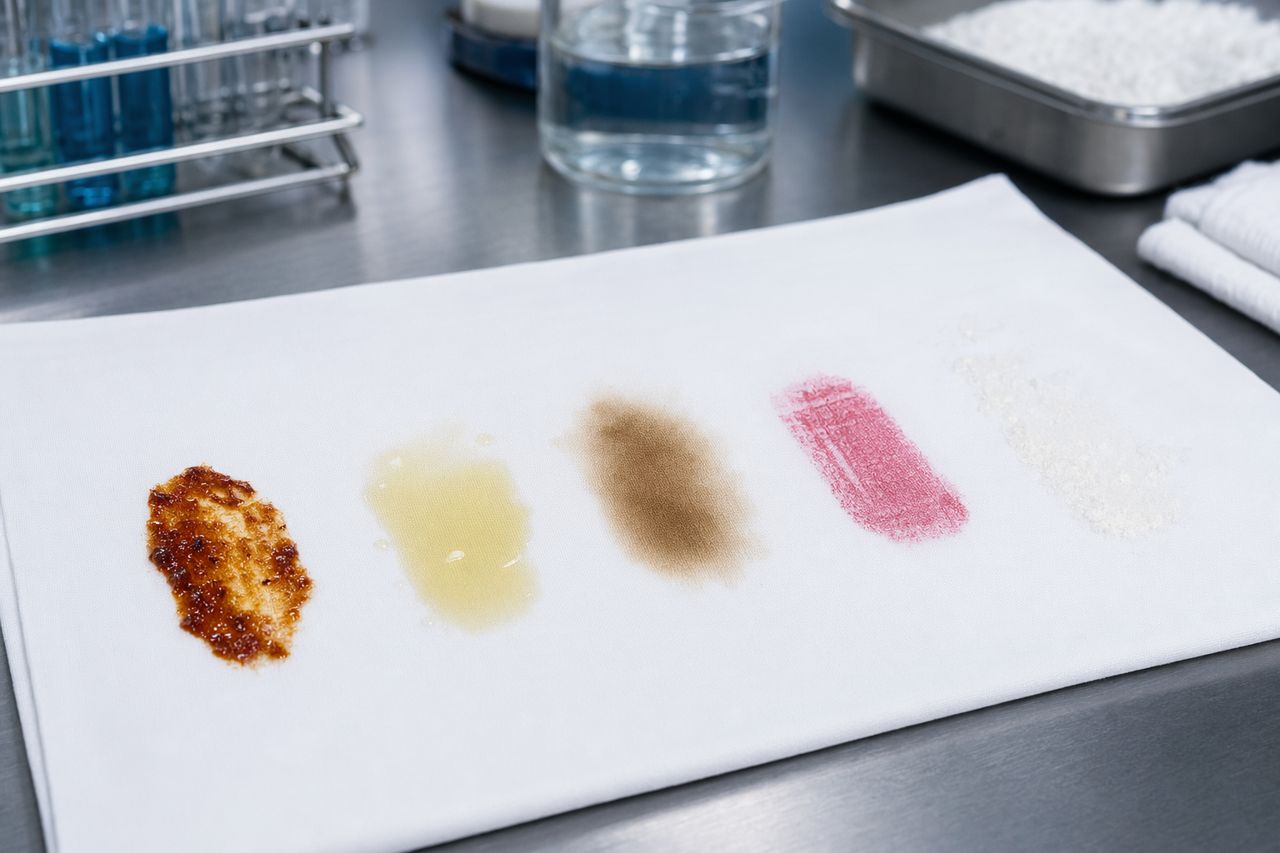
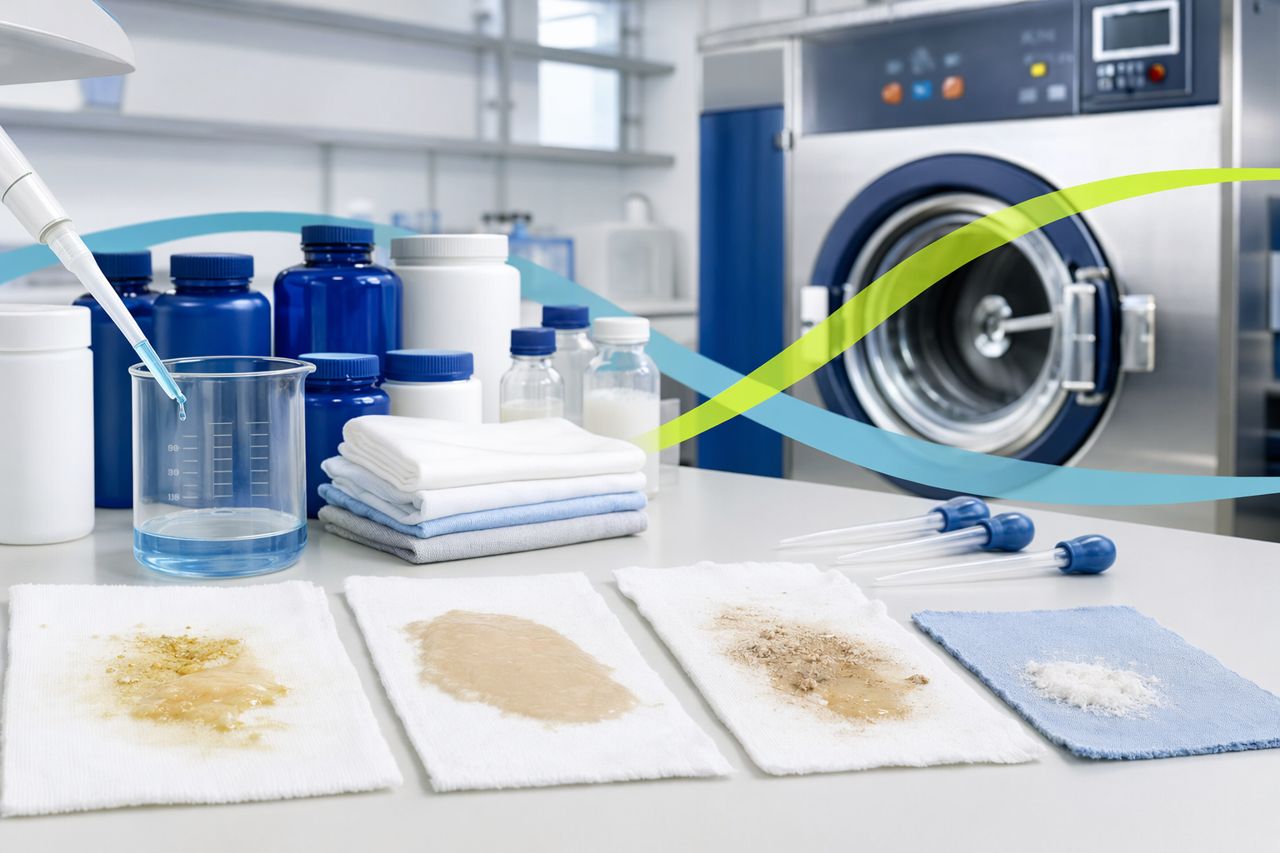
Common Stain Types in Hospitality and Healthcare Laundry
For an industrial laundry chemical supplier, stain performance is not a single claim. Hospitality and healthcare laundries process mixed textile loads with different soil chemistry, hygiene expectations, fabric constructions, and rewash costs. A detergent or additive system has to remove visible soils, protect whiteness, support consistent machine throughput, and remain stable in concentrated chemical formats.
Enzymimpact supports formulators building differentiated industrial laundry detergents, boosters, and pre-spotting products with enzyme systems selected for real laundry substrates and process conditions. The practical starting point is a clear stain map.
Why stain type should guide enzyme selection
Industrial laundry stains are complex blends. A table napkin may contain protein, starch, oil, pigment, and tannin in the same mark. A healthcare sheet may carry proteinaceous body soils plus residual skin-care ingredients and inorganic discoloration. Selecting the right enzyme class helps formulators target the soil structure that holds the stain to cotton, polycotton, polyester, or blended workwear.
For product managers, this affects:
- Detergent differentiation in low- and medium-temperature wash programs
- Rewash reduction for high-volume hospitality and healthcare accounts
- Compatibility with surfactants, builders, alkalinity, bleaching systems, and preservatives
- Format decisions for liquids, powders, soluble sachets, boosters, and dosing concentrates
- Scale-up confidence when moving from lab prototypes to customer-site trials
Major hospitality laundry stain groups
Food protein stains
Typical sources include egg, dairy, meat juices, sauces, gravy, and dessert residues on napkins, table linen, kitchen towels, and chef wear. These soils bind strongly to fibers when exposed to heat or drying before wash.
Formulation direction: Protease is usually the core enzyme class for proteinaceous stains. In hospitality formulations, protease selection should be balanced with surfactant removal of fats and compatibility with alkaline builders and bleaching strategies.
Starch and sauce residues
Pasta sauces, rice, potato, bakery fillings, thickeners, and processed food residues often leave a film that traps pigments and oils. Once dried, starch-rich deposits can make stains appear darker and more persistent.
Formulation direction: Amylase helps break down starch binders so surfactants and builders can remove the loosened soil package. It is especially useful in table linen programs and food-service textile streams.
Fats, oils, and kitchen grease
Cooking oil, butter, frying residues, salad dressing, lipstick transfer, and oily cosmetic marks create hydrophobic stains that can redeposit onto fabric if the wash system is not well balanced.
Formulation direction: Lipase can support removal of triglyceride-based soils, while surfactant architecture and emulsification capacity remain critical. For concentrated products, formulation stability and storage profile should be assessed early.
Tannin and beverage stains
Coffee, tea, red wine, fruit juices, and colored beverages are common on hotel and restaurant textiles. These stains can combine polyphenols, sugars, acids, and natural pigments.
Formulation direction: Enzymes may help when beverage stains are mixed with food soils, but tannin removal usually depends on the full detergent system, including alkalinity, oxidizing chemistry, sequestration, and anti-redeposition design.
Cosmetics, sunscreen, and personal care residues
Hotel towels, pillowcases, spa linen, and robes frequently carry foundation, mascara, body lotion, hair products, sunscreen, and skin oils. These can cause grey build-up, localized discoloration, and reduced hand feel.
Formulation direction: Lipase and protease may assist with oily and proteinaceous fractions, while cellulase can support surface appearance management on cotton-rich textiles when used appropriately. Surfactant choice and soil suspension are decisive.
Major healthcare laundry stain groups
Blood and body fluid soils
Healthcare textiles can contain blood, serum, mucus, wound exudate, and other protein-rich materials. Heat exposure before effective removal can set these soils and raise rewash risk.
Formulation direction: Protease is a key enzyme class for protein breakdown. Healthcare formulations must also be designed around hygiene protocols, oxidizing systems, textile tolerance, and process validation requirements set by the laundry operator.
Skin soils and sebum
Sheets, gowns, towels, blankets, and patient apparel accumulate sebum, sweat, skin flakes, lotions, and barrier creams. These soils contribute to malodor, greying, and soil redeposition.
Formulation direction: Protease and lipase can address important fractions of this soil mix. The supporting detergent matrix should maintain dispersion, prevent redeposition, and remain effective across variable water hardness.
Starch-based medical and dietary residues
Food service in care environments introduces starches from meals, nutritional products, thickened liquids, and spills. These soils may be less visible at first but can become fixation points for discoloration.
Formulation direction: Amylase helps reduce starch films and improves downstream removal by surfactants and bleaching components.
Ointments, creams, and emollients
Barrier creams, ointments, petroleum-based products, topical treatments, and moisturizers can create heavy hydrophobic deposits on healthcare textiles. These soils challenge emulsification and may carry pigments or active residues.
Formulation direction: Lipase can be considered where fat-based components are significant, but formula architecture is essential. Builders, solvents, surfactants, and anti-redeposition polymers should be screened alongside enzyme choice.
Disinfection-related discoloration and chemical residues
Some marks in healthcare laundry are not classic removable stains. Chlorhexidine interaction, iodine residues, metal contamination, medication spills, and disinfectant exposure can create color changes that are difficult to reverse.
Formulation direction: Enzymes are not a universal answer for chemical discoloration. A credible product line should separate enzyme-addressable soils from oxidation, chelation, and specialty stain-treatment needs.
Stain-to-enzyme selection overview
| Stain group | Common textile stream | Primary formulation consideration | Relevant enzyme class |
|---|---|---|---|
| Blood, dairy, egg, meat, body fluids | Healthcare linen, chef wear, table linen | Protein breakdown before heat setting | Protease |
| Pasta, rice, sauces, thickeners, bakery residues | Napkins, tablecloths, food-service textiles | Starch film removal and pigment release | Amylase |
| Cooking oils, sebum, lotions, ointments | Towels, sheets, uniforms, spa linen | Hydrophobic soil release and emulsification support | Lipase |
| Cotton surface fuzz and greying contribution | Towels, sheets, cotton-rich linen | Appearance maintenance and brightness support | Cellulase |
| Mixed food gums and processed residues | Table linen, kitchen textiles | Removal of specific thickener or gum fractions | Mannanase or targeted carbohydrate enzymes |
This table is a development starting point, not a substitute for application screening. The best-performing industrial laundry products are usually built as systems: enzyme selection, surfactant package, builder chemistry, alkalinity, bleach compatibility, sequestration, fragrance, preservation, and format stability all have to work together.
What formulators should evaluate before scale-up
Substrate compatibility
Hospitality and healthcare accounts wash cotton, polycotton, polyester, microfiber, terry, and specialty barrier fabrics. Enzyme selection should be checked against fabric strength, color retention, hand feel, and repeat-wash appearance.
Wash conditions
Industrial laundries vary by tunnel washer or washer-extractor design, dosing sequence, water hardness, alkalinity, temperature, contact time, and rinse profile. A robust enzyme system should be chosen for the conditions your customers actually run, not only for idealized lab conditions.
Formula stability
Laundry chemical manufacturers need enzymes that fit commercial product formats. Stability should be considered with surfactants, solvents, builders, preservatives, alkalinity, oxidants, and storage temperature exposure. Early compatibility screening reduces reformulation risk.
Claim discipline
A strong product story separates stain classes clearly. Instead of broad claims such as “removes all stains,” industrial buyers respond to defined performance language: protein-rich healthcare soils, starch-based food residues, oily kitchen soils, cotton brightness maintenance, or low-temperature wash support.
Building a differentiated laundry enzyme platform
For suppliers serving industrial laundries, the commercial goal is not only stain removal. It is a product portfolio that helps laundries lower rewash, protect textile value, simplify dosing, and meet customer expectations across hospitality and healthcare accounts.
Enzymimpact can support enzyme class selection, blend strategy, formulation compatibility discussions, and scale-up planning for industrial laundry detergents and additives. If you are developing a new product or improving an existing range, start with the stain map and build the enzyme system around the highest-value soil problems your customers face.
Request a quote
Need enzyme options for an industrial laundry detergent, booster, or additive? Share your target textile stream, product format, wash conditions, and key stain challenges through the on-site request form.