Textile Life in Industrial Laundry: Chemistry Choices That Affect Replacement Costs
For an industrial laundry chemical supplier, stain removal is only part of the value equation. Textile life affects customer economics every week: linen replacement, reject rates, rewash volume, customer complaints, and route profitability.
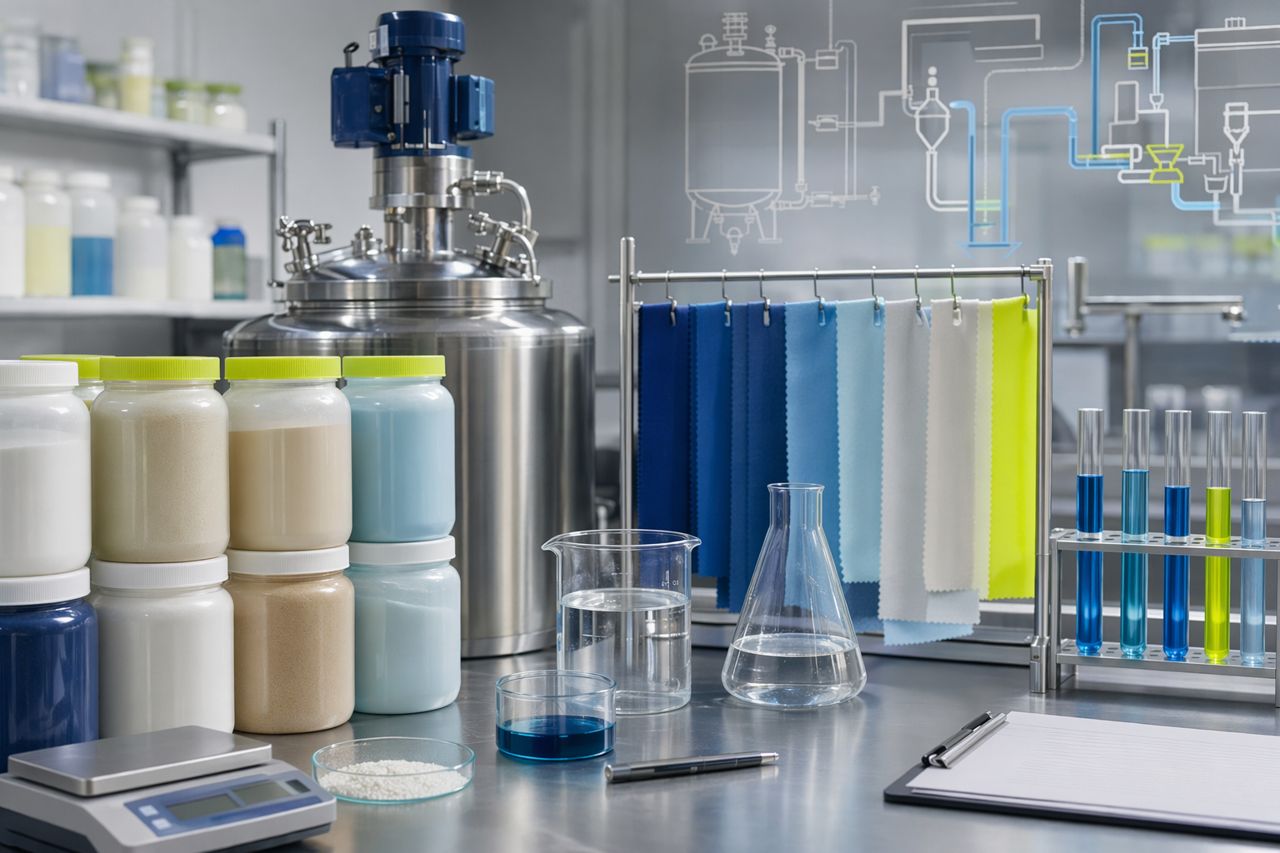
A detergent or additive that cleans aggressively but accelerates fabric wear can look strong in a short test and expensive in service. Enzymimpact helps laundry chemical manufacturers select enzyme systems that support differentiated cleaning while protecting the commercial value of textiles across repeated wash cycles.
As an enzyme supplier for industrial laundry chemicals, we focus on practical formulation outcomes: stain coverage, fabric compatibility, wash-temperature flexibility, storage stability, and scale-up confidence.
Why textile life belongs in formulation decisions
Industrial laundries process high volumes of mixed soil under operational constraints. Wash programs must remove protein, starch, fat, body soil, food residues, and particulate soil from textiles that may already be mechanically stressed.
Chemistry choices influence textile life through several routes:
- Alkalinity and builder load: Strong alkalinity can support soil removal, but repeated exposure can weaken sensitive fibers and finishes.
- Oxidizer intensity: Bleach systems can improve whiteness, yet overuse may increase tensile strength loss, shade change, or surface harshness.
- Temperature profile: Higher wash temperatures can improve cleaning but increase energy cost and textile stress.
- Mechanical action: Chemistry that requires longer or harsher cycles can indirectly increase abrasion.
- Rewash frequency: Poor first-pass cleaning sends textiles back through additional cycles, accelerating cumulative wear.
Enzymes can help shift the formulation balance. By targeting specific soils, they can reduce reliance on overly aggressive conditions while maintaining cleaning performance.
Enzyme class selection and textile impact
Different enzyme classes contribute different cleaning advantages. The right selection depends on the soil profile, fabric mix, wash program, and product format.
Protease for protein-rich soils
Protease supports removal of blood, food protein, dairy residues, sweat components, and body soil. In industrial laundry formulations, protease can help improve cleaning at moderate wash conditions, reducing the need to solve protein soil only through higher alkalinity or heat.
For textile-life positioning, protease is most valuable when paired with the correct alkalinity window, surfactant package, and oxidizer strategy.
Amylase for starch and processed food residues
Amylase targets starch-based soils common in hospitality, food service, kitchen towels, napery, and workwear. Without amylase, starch residues can bind soils and contribute to dullness or incomplete stain release.
A well-selected amylase can improve first-pass removal and reduce rewash pressure, which is often one of the hidden drivers of textile replacement cost.
Lipase for fats, oils, and sebum
Lipase can assist with fatty soils, edible oils, cosmetic residues, and body oils. In workwear and hospitality laundry, lipid residues can trap particulate soil and create persistent greying.
Lipase selection should be aligned with surfactant system, emulsification strategy, and wash temperature. The goal is not only visible stain removal, but more consistent soil release over repeated processing.
Mannanase for gum-based food and personal-care soils
Mannanase helps address guar and galactomannan residues found in sauces, dressings, ice cream, and some personal-care products. These soils can create sticky films that bind other contaminants.
For laundries serving restaurants, hotels, and mixed institutional accounts, mannanase can improve differentiation where conventional detergent packages struggle with film-forming food soils.
Cellulase for cotton surface management
Cellulase requires careful positioning. On cotton and cotton-rich blends, selected cellulases can support surface appearance by helping manage fibrils that contribute to greying and roughness. However, cellulase must be chosen and dosed with textile integrity in mind.
For product managers, the key is controlled benefit: improved appearance and hand feel without creating unnecessary strength loss or shade impact.
Fabric and substrate compatibility matters
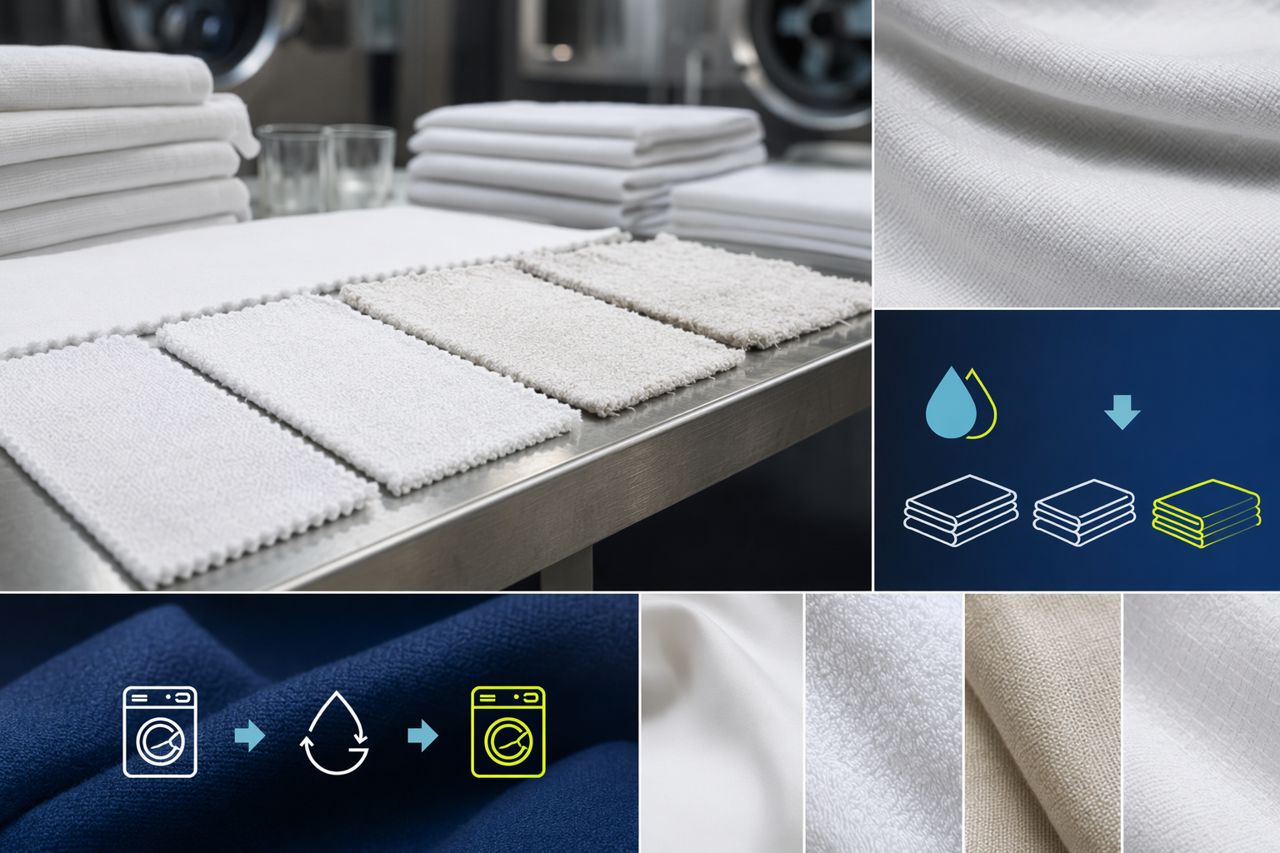
Industrial laundry is not a single fabric environment. A formulation may see cotton terry, polycotton sheets, polyester table linen, microfiber, healthcare textiles, and flame-resistant or high-visibility workwear.
Enzymimpact evaluates enzyme recommendations against the textile realities of the end-use segment:
- Hospitality linen: brightness, stain release, softness, and low reject rates.
- Healthcare textiles: reliable cleaning with attention to sensitive fabric finishes and program compatibility.
- Food-service textiles: protein, starch, fat, and colored food soils under high throughput.
- Industrial workwear: mixed oils, body soil, particulate soil, and durable fabric requirements.
- Microfiber and synthetics: soil release without compromising hand feel, absorbency, or surface performance.
Substrate compatibility should be tested early, not after a product is already scaled. Enzyme selection, stabilizer choice, pH profile, and oxidizer separation can all affect the final textile-life story.
Lower-temperature cleaning and reduced process stress
Many laundries are under pressure to reduce energy use while maintaining hygiene, whiteness, and stain removal. Enzymes can support lower-temperature wash programs by improving removal of targeted soils under milder thermal conditions.
The commercial benefit is broader than energy savings. When chemistry enables shorter, milder, or more efficient cycles, laundries may reduce cumulative stress on textiles. That can help customers protect linen assets while maintaining service quality.
This is where enzyme selection becomes a product-positioning tool. A supplier can build detergents and additives around outcomes such as:
- improved first-pass stain removal,
- better cleaning at moderate wash temperatures,
- reduced dependence on harsh corrective chemistry,
- fewer rewashes for recurring soil types,
- stronger value arguments for textile asset management.
Formulation stability: where good enzyme ideas succeed or fail
An enzyme system is only useful if it remains compatible with the commercial product format. Industrial laundry products can involve challenging matrices: high alkalinity, builders, sequestrants, surfactants, solvents, preservatives, colorants, fragrances, and sometimes oxidizing systems.
Enzymimpact supports selection for formats such as:
- liquid detergents,
- enzyme boosters,
- prespotters and stain-treatment additives,
- powders and granulated systems,
- multi-component laundry programs where enzyme and oxidizer are separated.
Key formulation questions include:
- Where does the enzyme sit in the program? Main wash, prewash, prespotting, or additive dosing all create different exposure conditions.
- What soils define success? Protein, starch, fat, and gum soils should guide enzyme class selection.
- Which textiles define risk? Cotton terry, polycotton, microfiber, workwear, and dark textiles have different sensitivities.
- What chemistry must the enzyme tolerate? pH, surfactants, builders, solvents, preservatives, and storage temperature all matter.
- What claim must the customer prove? Textile life, rewash reduction, lower-temperature cleaning, brightness, or stain coverage require different validation plans.
Building a textile-life claim responsibly
Textile-life claims should be practical and evidence-led. Product managers should avoid overpromising and focus on measurable customer value.
Useful claim territories include:
- supports effective cleaning under milder wash conditions,
- helps reduce rewash caused by targeted soil residues,
- enables lower-temperature stain removal programs,
- contributes to fabric appearance maintenance when properly formulated,
- supports customer programs aimed at reducing textile replacement pressure.
The strongest claims connect enzyme function to the full wash system. Enzymes do not replace formulation discipline; they improve the precision of the system.
What Enzymimpact brings to laundry chemical manufacturers
Enzymimpact works with B2B formulation teams that need more than a generic enzyme listing. We help translate enzyme class selection into product decisions that are commercially useful.
Our support can include:
- enzyme class screening by target soil and textile category,
- guidance on compatibility with surfactants, builders, pH profile, and preservatives,
- recommendations for liquid, powder, booster, and multi-part laundry programs,
- scale-up considerations for storage, handling, dispersion, and dosing consistency,
- formulation narratives that support clear customer value without inflated claims.
The result is a more confident path from concept to customer trial: targeted stain performance, better fit with industrial wash conditions, and a stronger textile-life value story.
Practical development checklist
Before finalizing an enzyme-based industrial laundry product, align these questions internally:
- Which customer segment will the product serve: hospitality, healthcare, food service, workwear, or mixed commercial routes?
- Which three soil types cause the most rewash or rejects?
- Which textile types are most valuable or most vulnerable?
- Can the product clean effectively under milder temperature, alkalinity, or cycle conditions?
- Will enzyme and oxidizer exposure be separated where needed?
- Does the stability plan reflect real storage and transport conditions?
- Can the sales team explain textile-life value in operational language?
If the answer is unclear, enzyme selection should happen before the formula is locked.
Request a quote
Developing an industrial laundry detergent, enzyme booster, or stain-treatment additive with a textile-life value proposition?
Request a quote from Enzymimpact and share your target soils, product format, wash conditions, and textile categories. We will help identify enzyme options that fit your formulation and commercial goals.